TL;DR
- Payment terms define exactly when and how a client must pay you to avoid confusion.
- Standard terms like "Net 30" or "Due on Receipt" impact your business liquidity and cash flow.
- Offering early payment discounts (e.g., 2/10 Net 30) can significantly speed up your accounts receivable.
- Clear, written terms on every invoice protect you legally and set professional boundaries.
Streamline your billing process today with our easy-to-use suite of business resources.
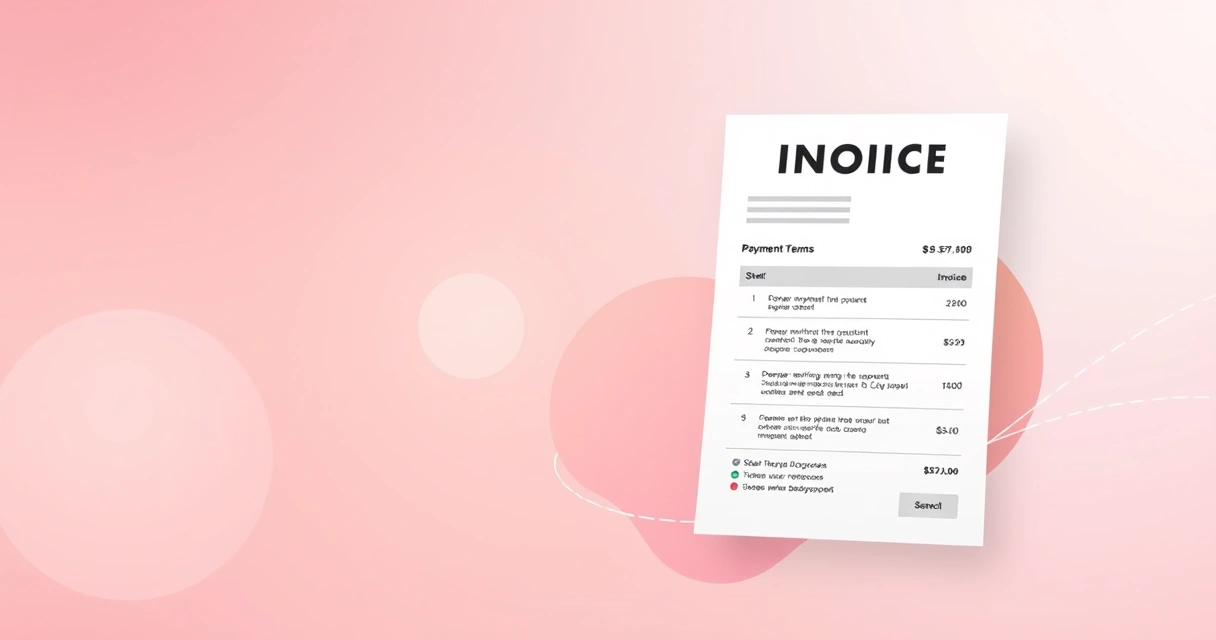
Payment terms on an invoice are the specific conditions under which a seller completes a sale, detailing exactly when the payment is expected and what methods are accepted. These terms typically include a specific timeframe, such as Net 30, and may outline early payment discounts or late payment penalties to ensure consistent cash flow for the business. By clearly defining these expectations, you reduce the risk of late payments and provide a professional framework for your client relationships.
Why Defining Payment Terms on Invoices is Essential for Cash Flow
Cash flow is the lifeblood of any small business or freelance operation. Research from QuickBooks suggests that mid-sized businesses often deal with thousands of dollars in unpaid invoices at any given time. Without specific payment terms, you are essentially providing an interest-free loan to your clients with no definitive end date. This lack of structure leads to Days Sales Outstanding (DSO) creeping up, which can prevent you from paying your own vendors or staff on time.
Setting firm terms establishes a professional boundary from the first interaction. It signals to your client that you run a disciplined operation. When a client sees "Net 15" on an invoice, they understand that the clock is ticking. Without that label, the invoice might sit in an inbox for weeks, buried under other "non-urgent" tasks. Clear terms also simplify the work for bookkeepers and accountants who need to schedule payments within their own systems.
Key Takeaway: Precise payment terms reduce the "gray area" in business transactions, directly lowering your DSO and ensuring you have the liquid capital needed to operate.
Effective financial management starts with tracking where your money is. If you find yourself constantly waiting on checks, you might need to track cash flow for your small business more aggressively. Understanding the timing of your inflows versus your outflows is the only way to avoid a liquidity crisis.
Common Invoice Payment Terms Every Business Should Know
The terminology used in invoicing can sometimes feel like a different language. However, using standard industry shorthand is often better than writing long paragraphs. Most accounting software and professional clients recognize these abbreviations instantly. Choosing the right one depends on your industry, your relationship with the client, and your current need for cash.
| Term | Meaning | Best For |
|---|---|---|
| PIA | Payment in Advance | New clients or high-risk custom orders. |
| Net 7/15/30/60 | Payment due within X days of invoice date | Standard B2B service contracts. |
| Due on Receipt | Payment expected immediately upon delivery | One-off freelance tasks or small retail orders. |
| EOM | End of Month | Ongoing monthly retainers or supply deliveries. |
| 2/10 Net 30 | 2% discount if paid in 10 days, else full in 30 | Encouraging fast payment from corporate clients. |
Net 30 remains the most common term in the corporate world. It gives the client enough time to process the invoice through their accounts payable department while ensuring the seller gets paid within a month. However, for a freelancer, thirty days can be a long time to wait for a paycheck. In these cases, Net 15 or even Net 7 might be more appropriate. You can find a deeper breakdown of these specific standards in our guide on Net 30 payment terms meaning.
Looking for a simple way to generate professional invoices and manage your business documents? BiizTools offers a variety of free utilities designed specifically for SMBs.
Strategic Use of Early Payment Discounts and Late Fees
Providing an incentive for early payment is one of the most effective ways to move to the top of a client's "to-pay" list. The 2/10 Net 30 term is a classic example. By offering a small 2% discount, you are essentially trading a tiny fraction of your profit for immediate liquidity. For many businesses, the cost of that 2% is much lower than the cost of a business loan or a line of credit used to cover a cash gap.
On the flip side, late fees serve as a deterrent. Your invoice should clearly state the penalty for missing the deadline. A common standard is 1.5% to 2% interest per month on the outstanding balance. While you may choose to waive this for a first-time mistake to maintain a good relationship, having it in your written terms gives you the leverage to collect what is owed if a client becomes habitually late.
Before implementing late fees, check your local regulations. For instance, many states and countries have usury laws that cap the maximum interest rate you can charge on overdue accounts. Generally, the National Federation of Independent Business (NFIB) suggests that terms should be consistent and communicated at the start of the contract, not just added to the final invoice unexpectedly.
Key Takeaway: Use a "carrot and stick" approach—incentivize early payments with small discounts and discourage late ones with clearly defined interest charges.
How to Write Clear and Professional Payment Terms
Clarity is more important than sounding "legalistic." If a client has to call you to ask what a term means, the term has failed its purpose. Use plain English wherever possible. Instead of just writing "Net 30," you might write "Payment Due: [Specific Date] (Net 30)." This removes any ambiguity about when the 30-day clock started ticking—was it when the work was finished, or when the invoice was sent?
Placement on the invoice matters. The payment terms should be prominent, usually located near the total amount due or in a dedicated "Terms" section at the bottom. Bold the due date so it is the first thing the eye catches. If you are a freelancer, you might also want to include your preferred payment methods, such as bank transfer details or a link to a payment portal. For more help on layout, refer to our professional guide to writing a freelance invoice.
Consistency across all your documents is also vital. Your initial quote or proposal should mention the same terms that will eventually appear on the invoice. If your proposal says "Due on Receipt" but your invoice says "Net 30," you create a loophole that the client might use to delay payment. Using BiizTools for freelancers can help you maintain this consistency by using standardized templates for all your business documentation.
Negotiating Payment Terms with Large Corporate Clients
Small businesses often feel they have no choice but to accept the "standard" terms of a large corporation. It is not uncommon for massive firms to demand Net 60 or even Net 90 terms. While this can be difficult for a small vendor, everything is negotiable. If a client insists on long terms, you can try to negotiate a higher project fee to compensate for the "financing" you are providing them.
Another tactic is to request a deposit or milestone payments. For a project that takes three months, you should not wait until the very end to send an invoice with Net 60 terms. Instead, bill 30% upfront (PIA), 30% at a midpoint milestone, and the remainder upon completion. This ensures you have some cash coming in to cover your expenses while the project is ongoing. According to the Prompt Payment Act in the United States, federal agencies are generally required to pay vendors within 30 days, which can be a useful benchmark to mention during negotiations with public sector entities.
If a client consistently pays late despite your terms, it might be time to re-evaluate the relationship. A high-paying client who takes 120 days to pay is sometimes less valuable than a lower-paying client who pays on the day they receive the invoice. Reliable cash flow allows for better planning and less stress, which has its own intrinsic value.
The Legal Importance of Including Terms on Every Document
In the unfortunate event that you have to take a client to small claims court or hire a collections agency, your invoice is your primary piece of evidence. If your invoice does not state a due date or late fee policy, it becomes much harder to prove that the client is in breach of contract. A judge will look for a clear "meeting of the minds" regarding when the money was owed.
Including your terms on every document—from the proforma invoice to the final receipt—creates a "paper trail" of agreement. This is especially important for international transactions where different laws might apply. Clearly stating the currency (e.g., USD, EUR, GBP) and the governing law of the contract can save thousands in legal fees later. Always ensure your contact information is up to date on these documents so there is no excuse for a "missing" invoice.
Key Takeaway: Your invoice is a legal document. Treat its terms with the same level of detail you would a signed contract to ensure you are protected in case of a dispute.
Managing a business is hard enough without worrying about formatting your documents or calculating complex ratios. BiizTools provides free, high-quality tools to help you stay organized and professional.
Frequently Asked Questions about Payment Terms
What does "Net 30" actually mean on an invoice?
Net 30 means that the full amount of the invoice is due within 30 days of the invoice date. The "Net" refers to the total amount after any deductions or discounts have been applied. It is one of the most common payment terms in business-to-business (B2B) transactions, providing a balance between the seller's need for cash and the buyer's need for processing time.
Can I change my payment terms for different clients?
Yes, you can and should tailor your terms based on the client's creditworthiness and your history with them. For a new client, you might require 50% upfront or "Due on Receipt." For a long-term, reliable client, you might extend "Net 30" as a courtesy. Just ensure that the terms are clearly stated on the invoice before the work begins to avoid surprises.
How do I handle a client who ignores my payment terms?
Start with a polite email reminder the day after the invoice becomes overdue. If they continue to ignore the terms, send a formal "past due" notice that includes the late fee you've previously specified. If the debt remains unpaid for 60-90 days, you may need to consider a collections agency or legal action. Consistent communication is often enough to resolve most late payment issues.
Is "Due on Receipt" better than "Net 15"?
"Due on Receipt" is better for immediate cash flow, but it can be frustrating for larger companies that have specific weekly or monthly payment runs. "Net 15" is often seen as more professional for B2B services, as it gives the client's accounting department a reasonable window to process the payment without feeling rushed, while still keeping your wait time short.